Transmission Main Assessment Phase 3
Project Owner: Town of Gilbert
Project Type: Construction Manager at Risk
Construction Dates: 09/24 to 06/26
Our Transmission Main Assessment Phase 3 CMAR project involved working with the Town of Gilbert, Black & Veatch (design engineer), and many subcontractors to assess the condition of more than nine miles of 30” to 36” transmission main and develop a plan to repair, rehabilitate, or replace segments of the pipeline and associated valves.
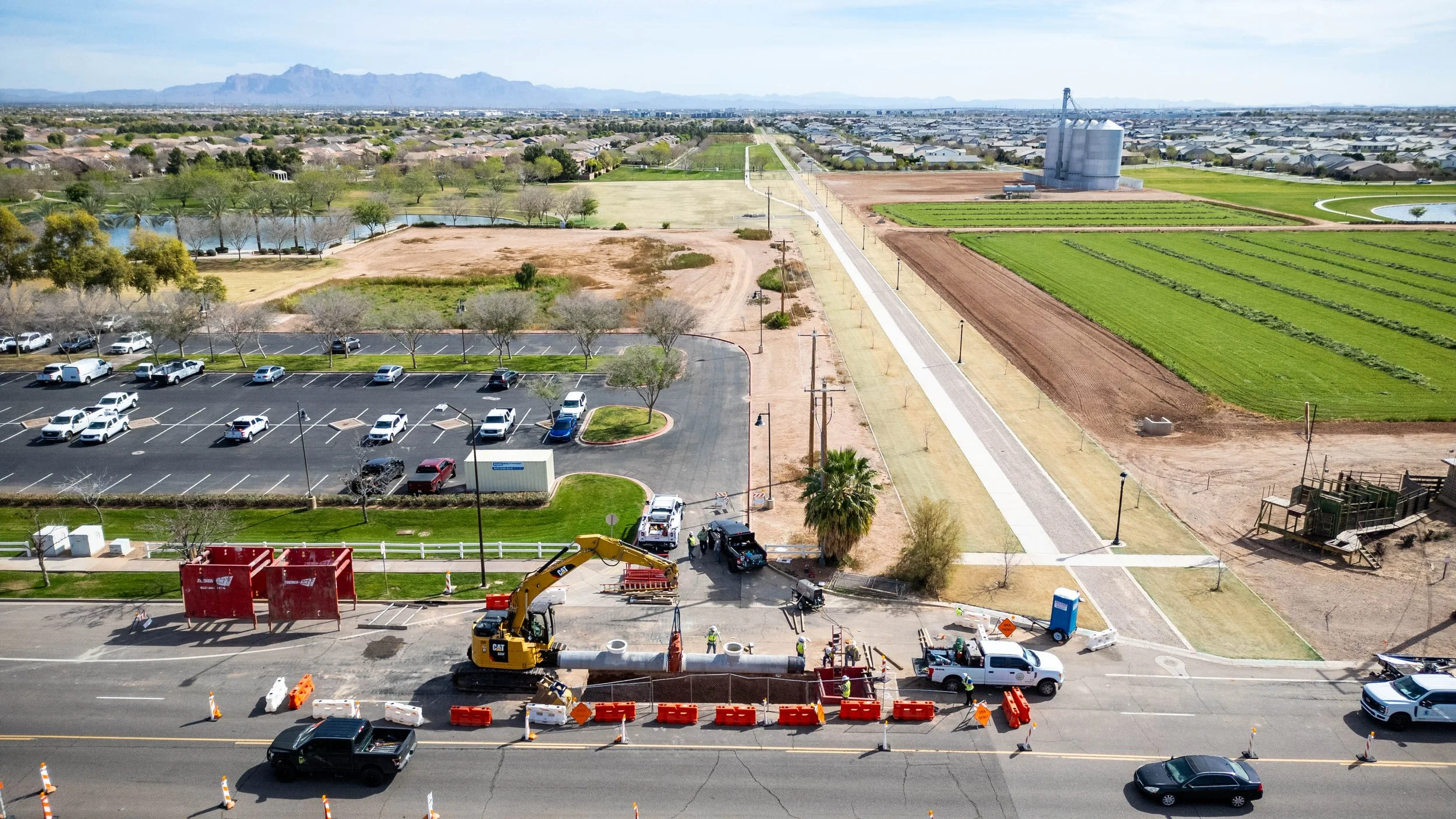
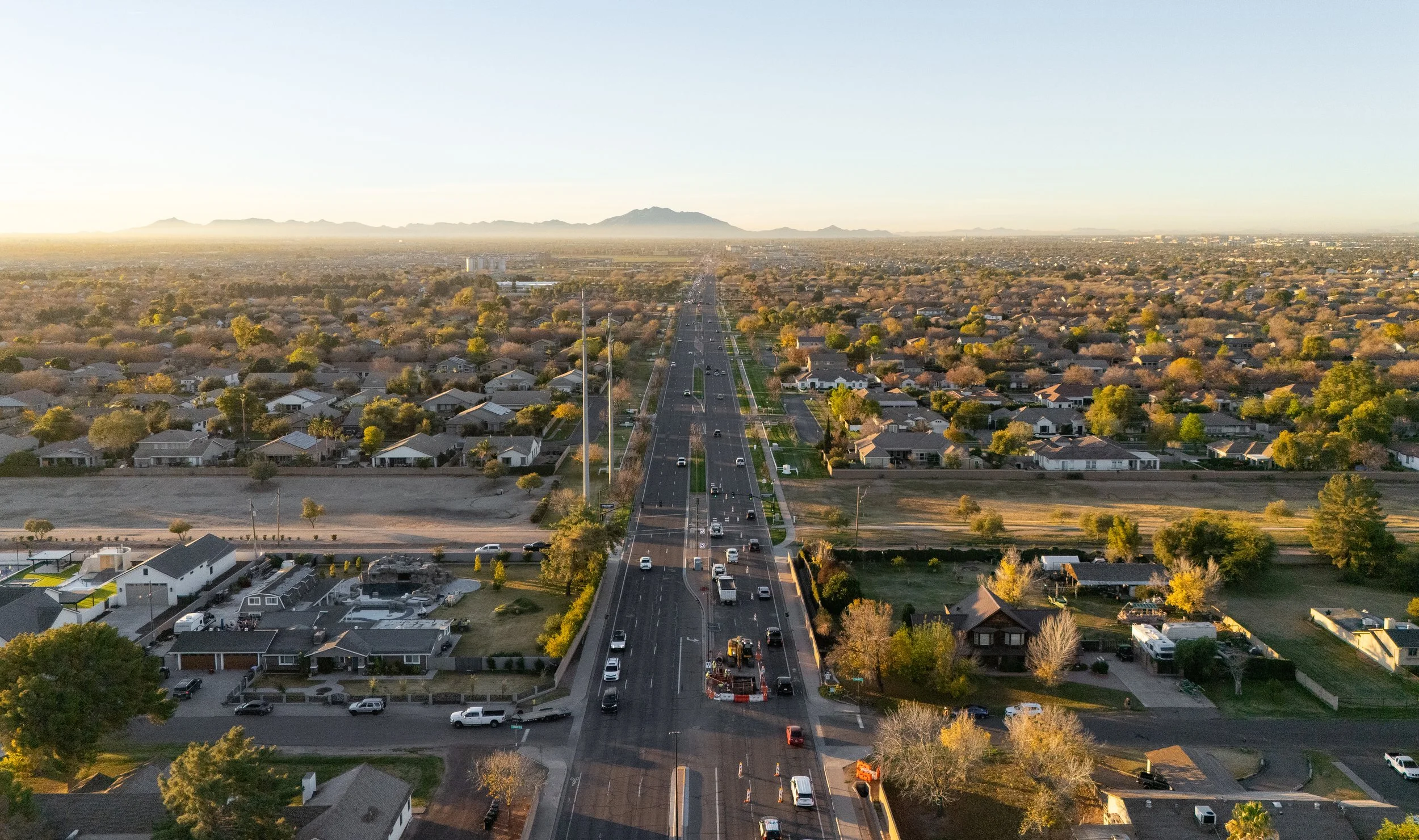
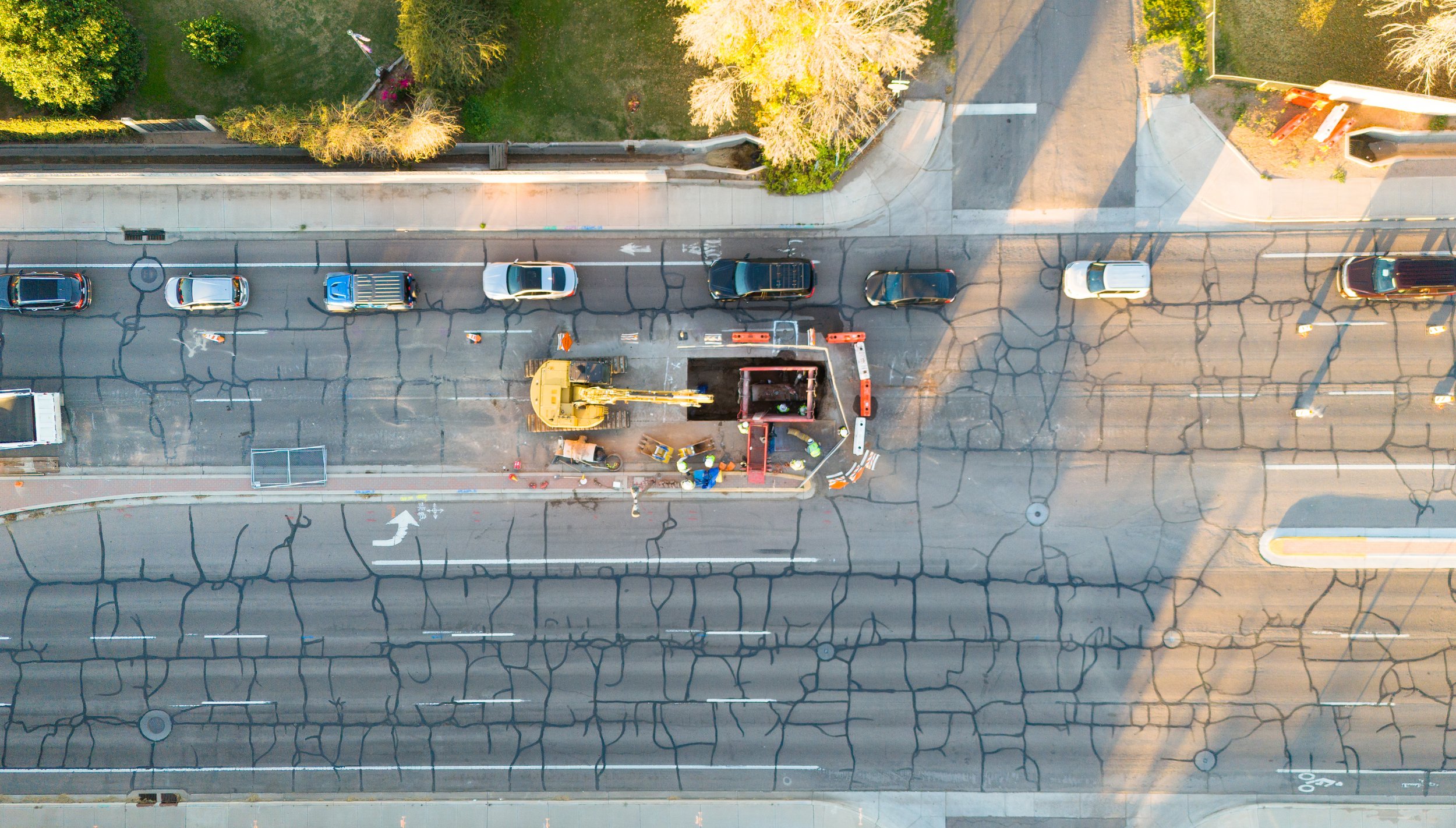
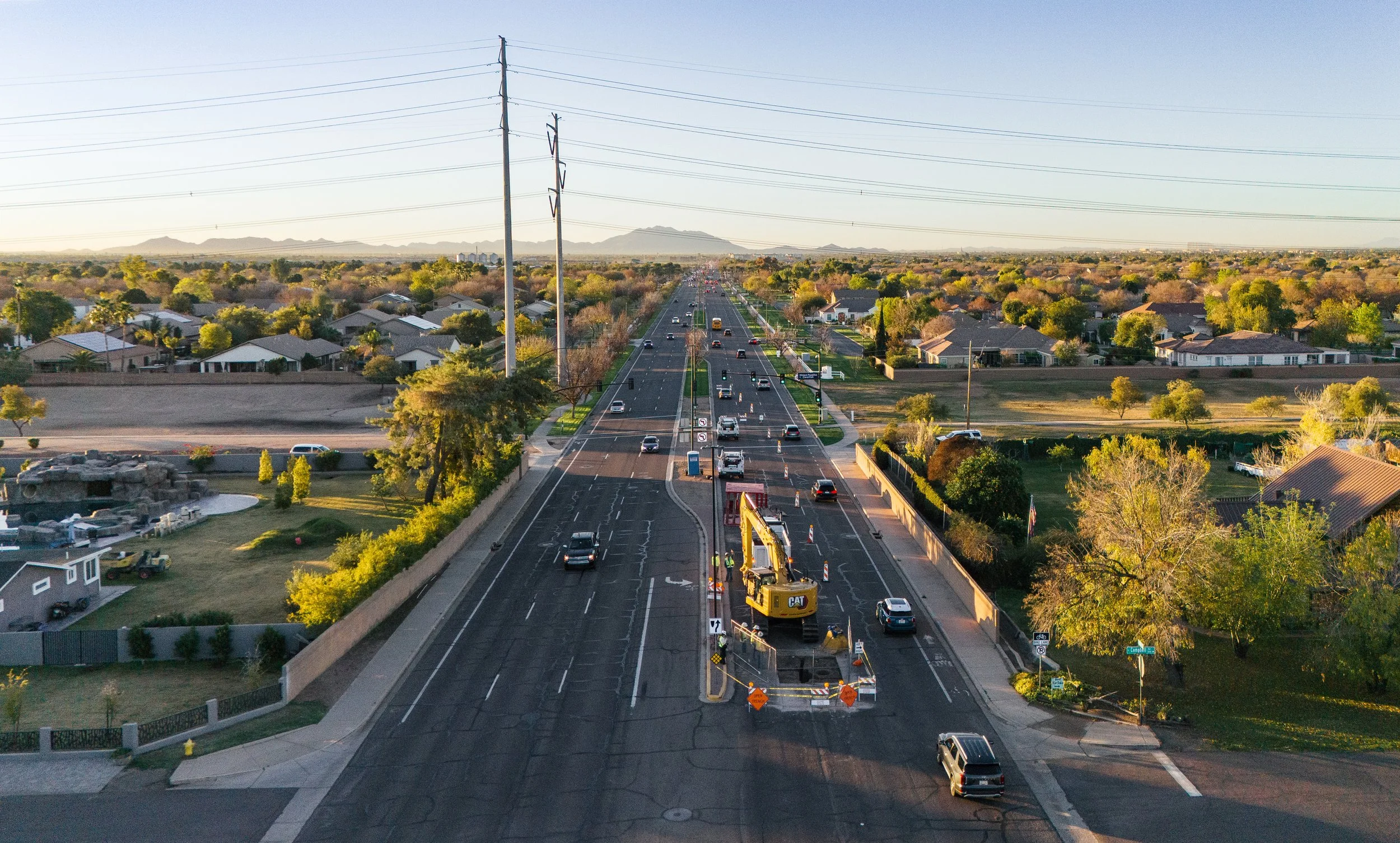
The transmission main was primarily located along Higley Road from Guadalupe Road to Ocotillo Road, which is a busy arterial corridor serving residential neighborhoods, local businesses, and future developments. The pipeline also crossed the ADOT Loop 202 freeway, Union Pacific Railroad, Queen Creek Canal, Sonoqui Wash, and other key locations. The work was completed in three segments, each approximately three miles long, during scheduled shutdowns.
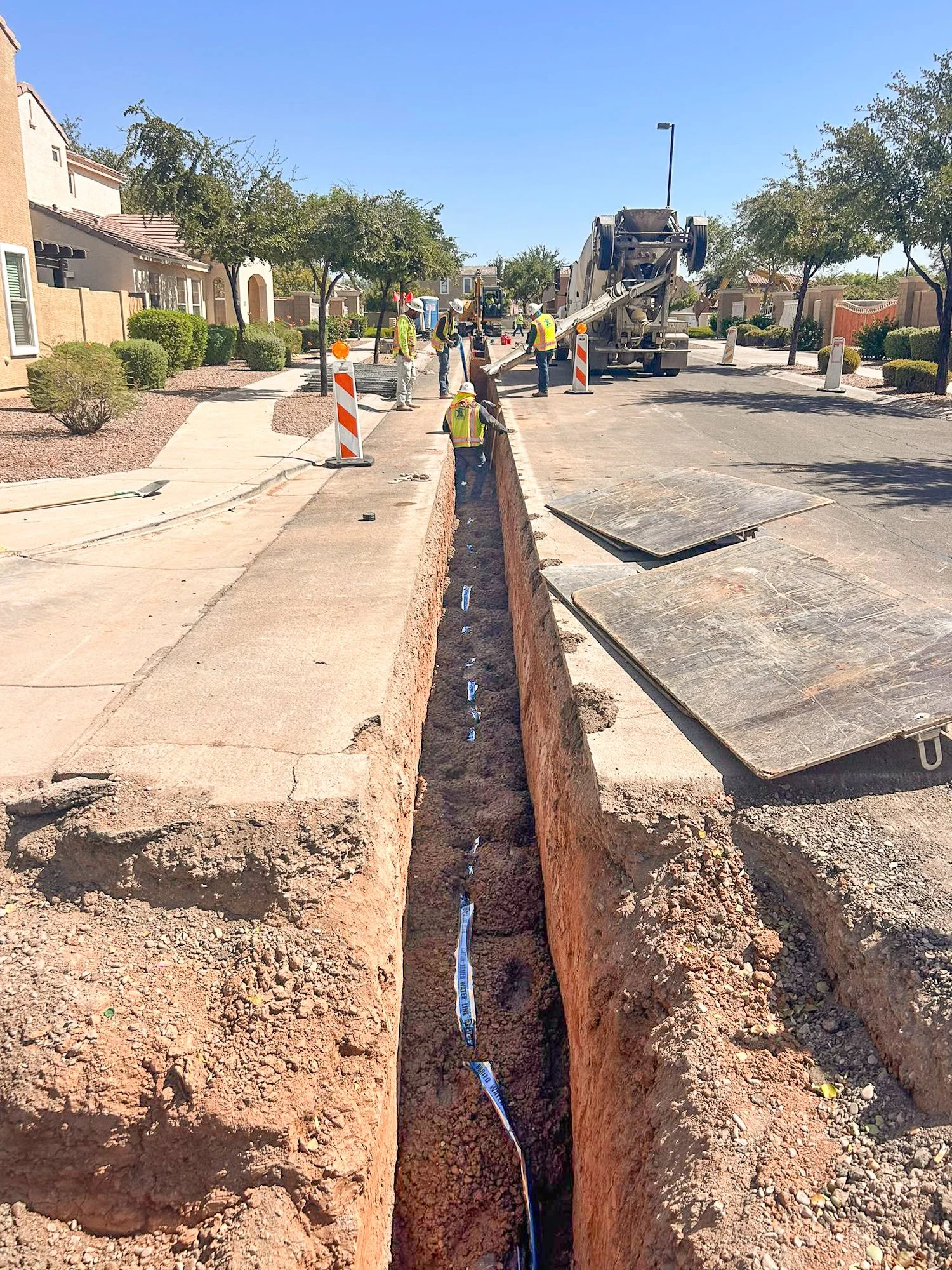
Throughout this process, we maintained water service for all stakeholders in the area. In preparation, we installed more than 500 LF of 8” and 12” water line to interconnect water lines and best maintain service to area residents and businesses during the shutdowns.
We completed an initial evaluation of some of the 30” to 36” pipeline with an Insight Water Technologies leak detection device called a Free-Swimming Multi-Sensor Sphere. It operates within the pipeline while the main is in service. We inserted this device at the water treatment plants on each side of the nine-mile alignment and the results assisted us with prioritizing areas in need of replacement or rehabilitation.
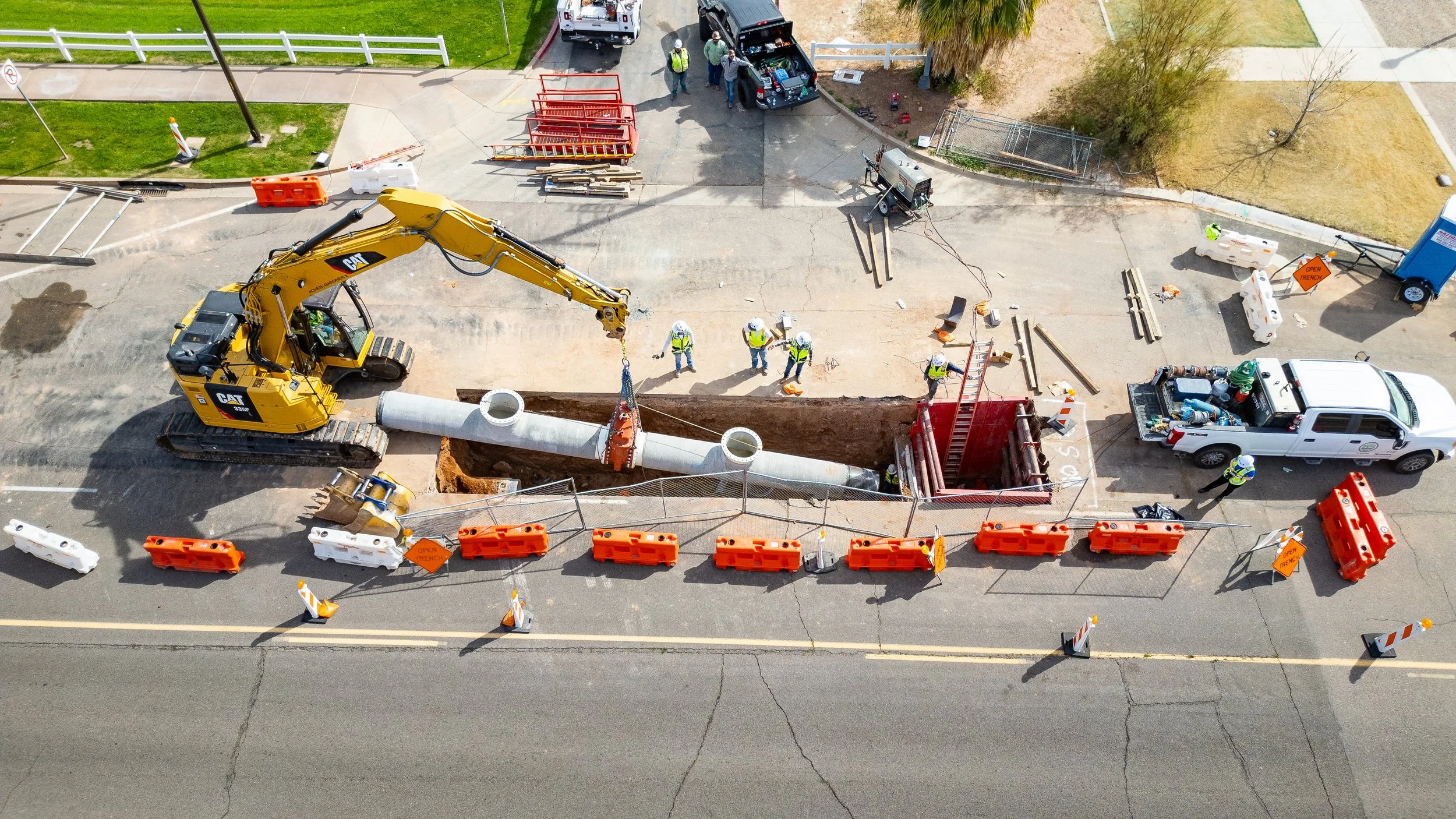
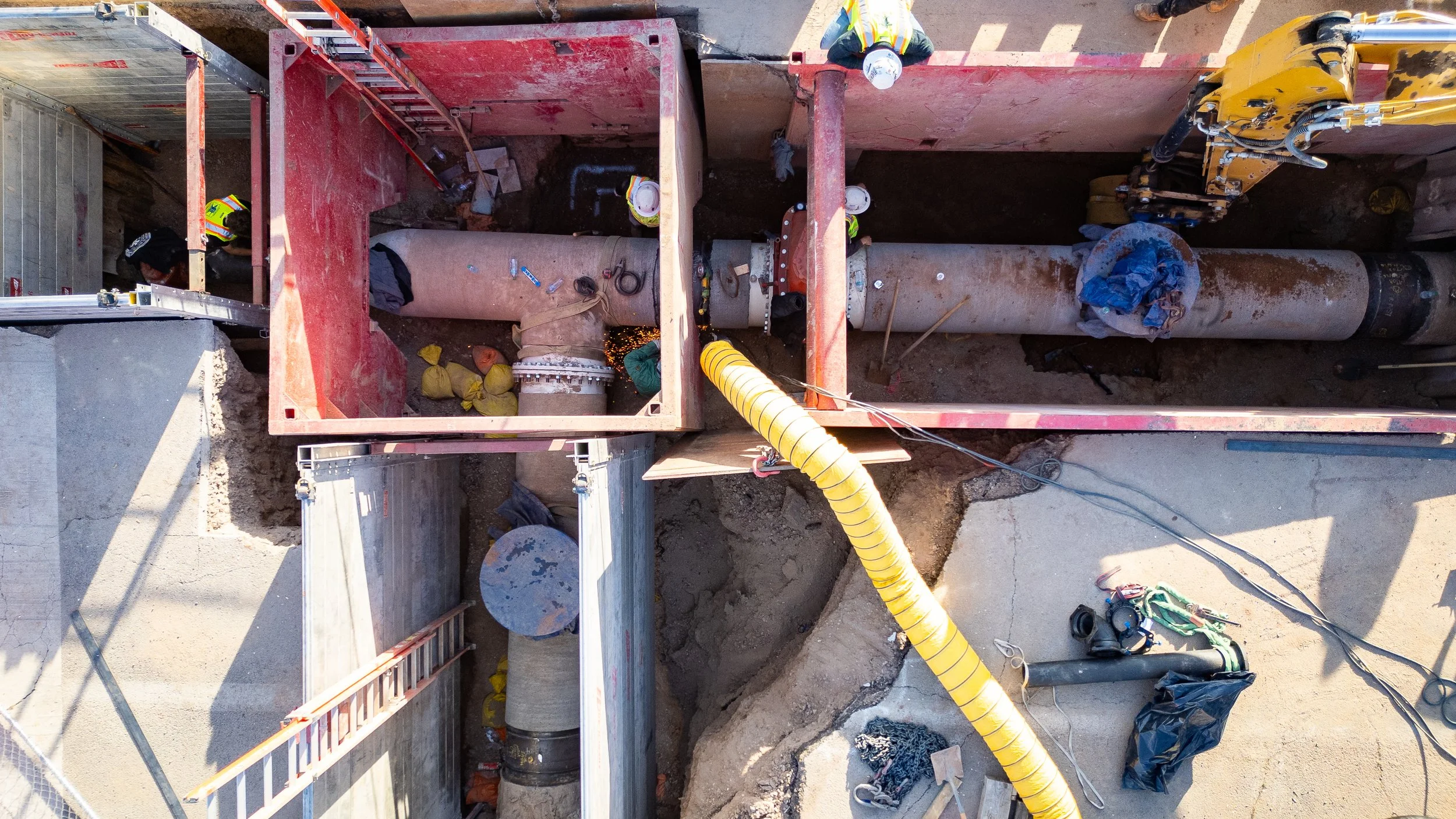
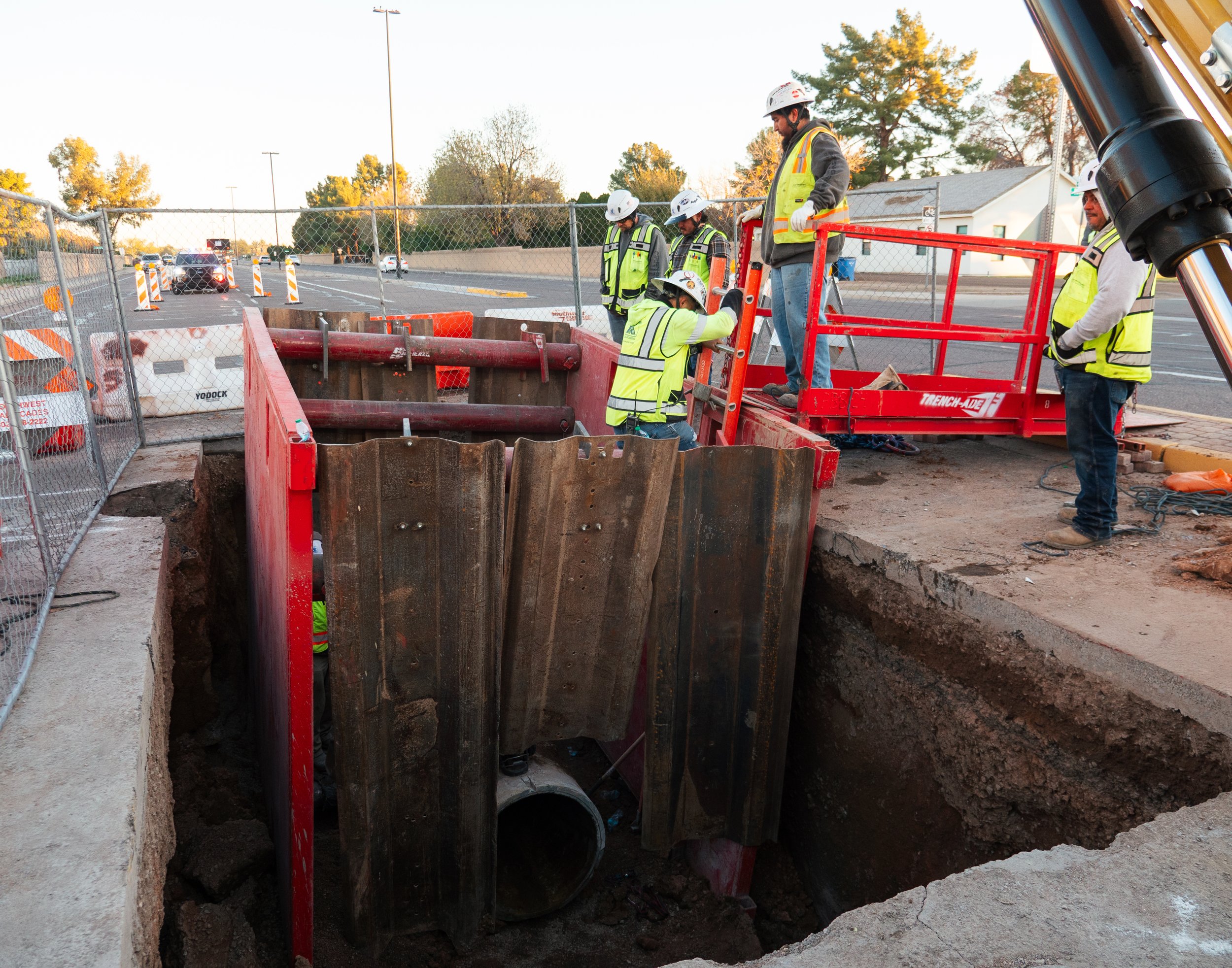
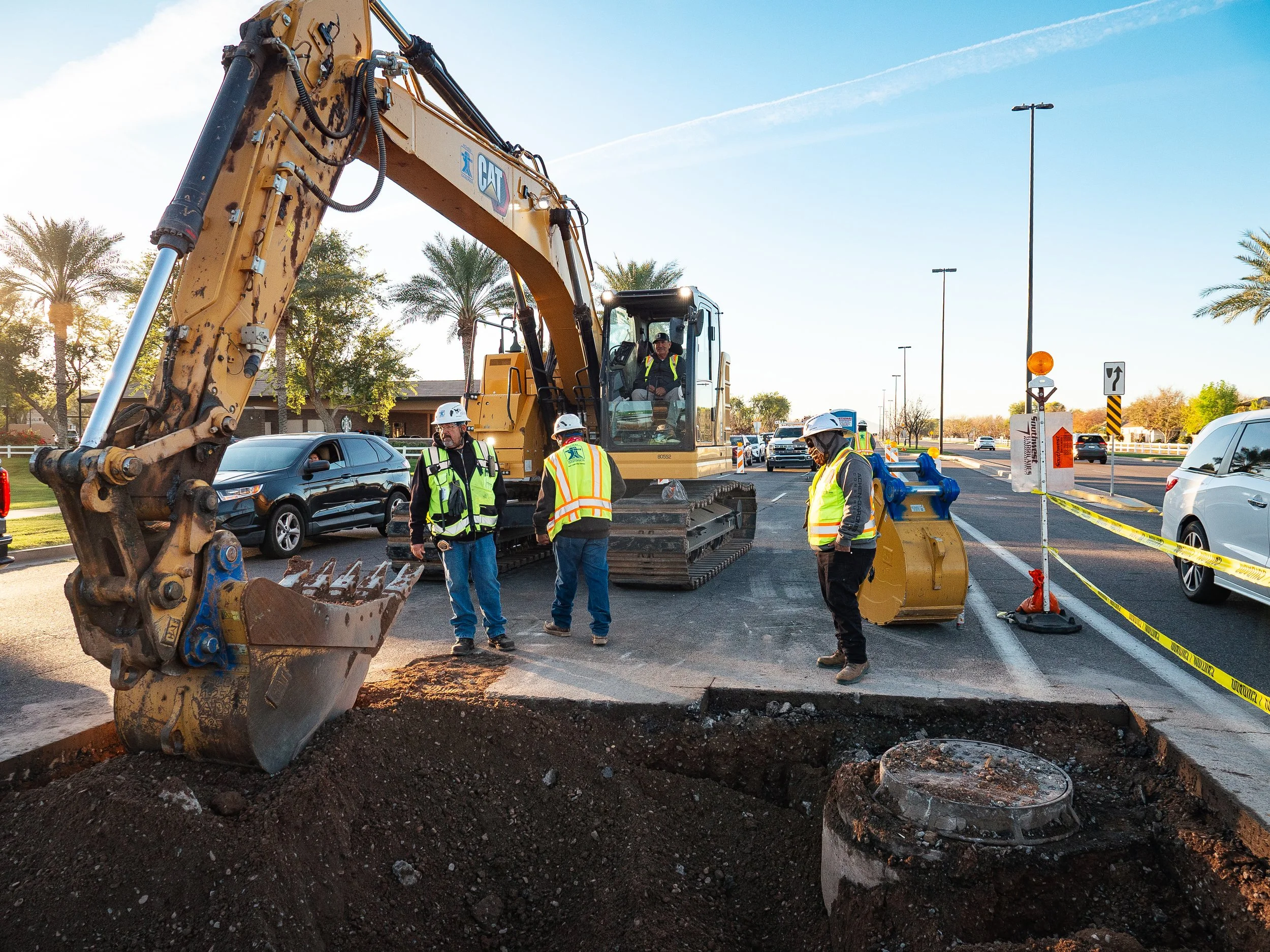
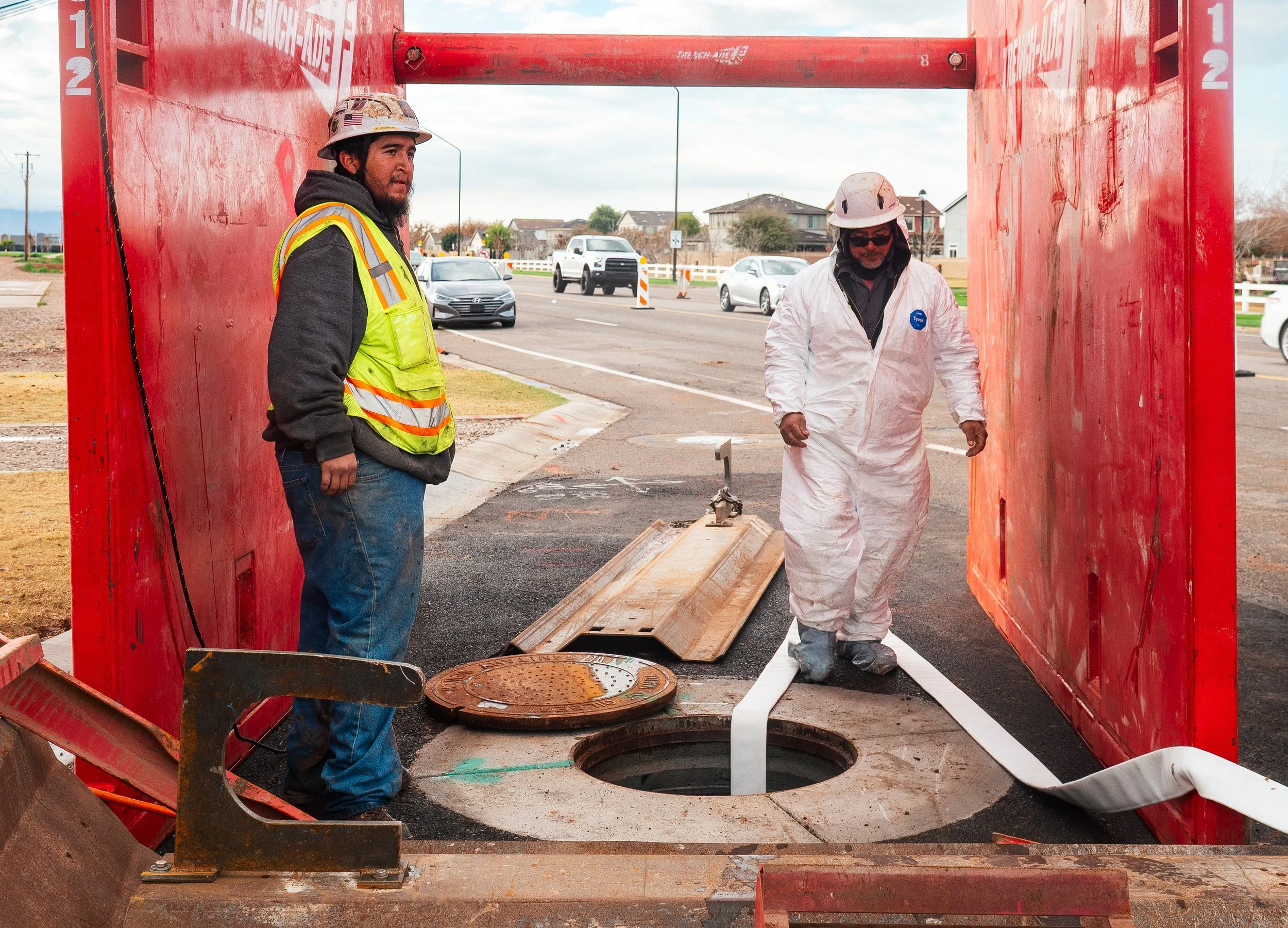
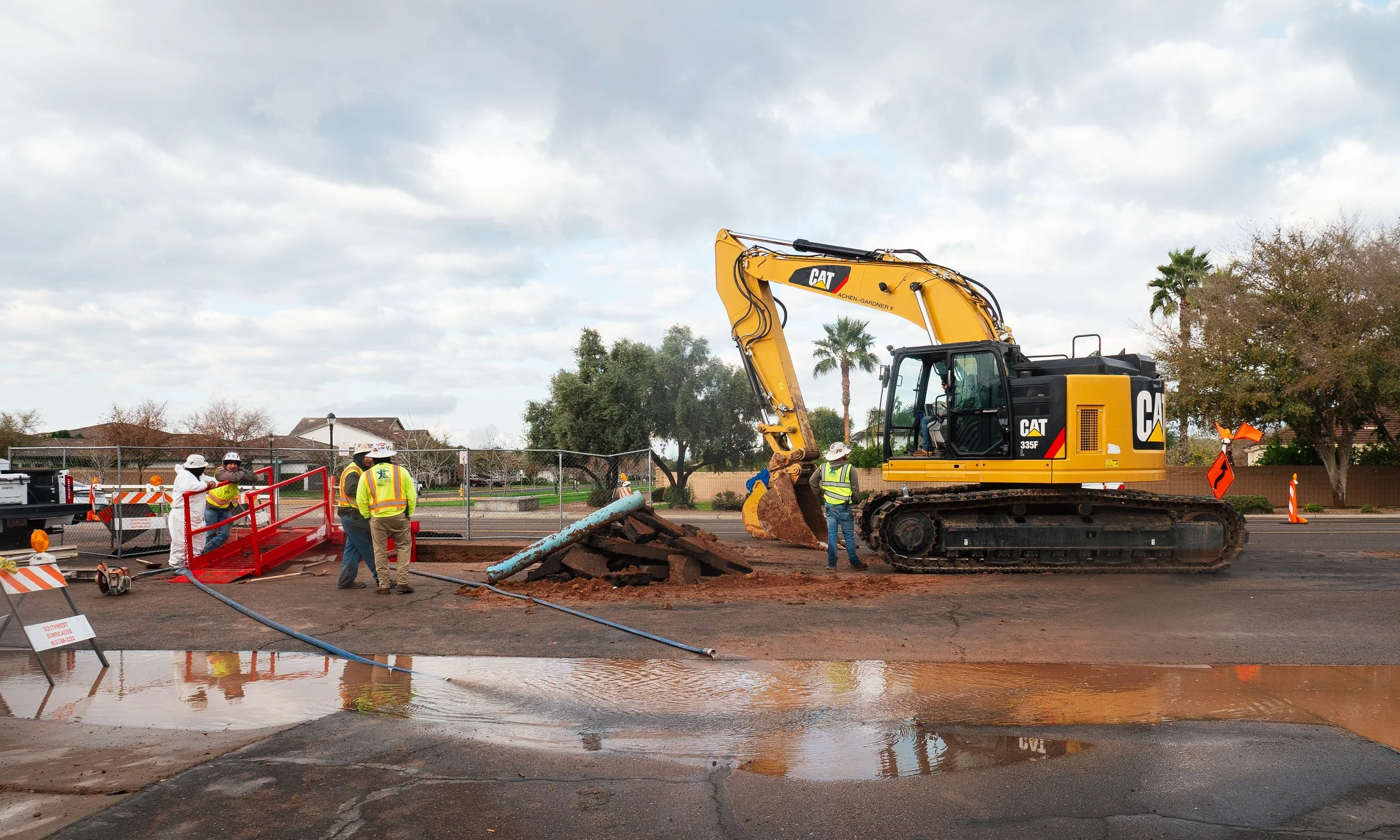
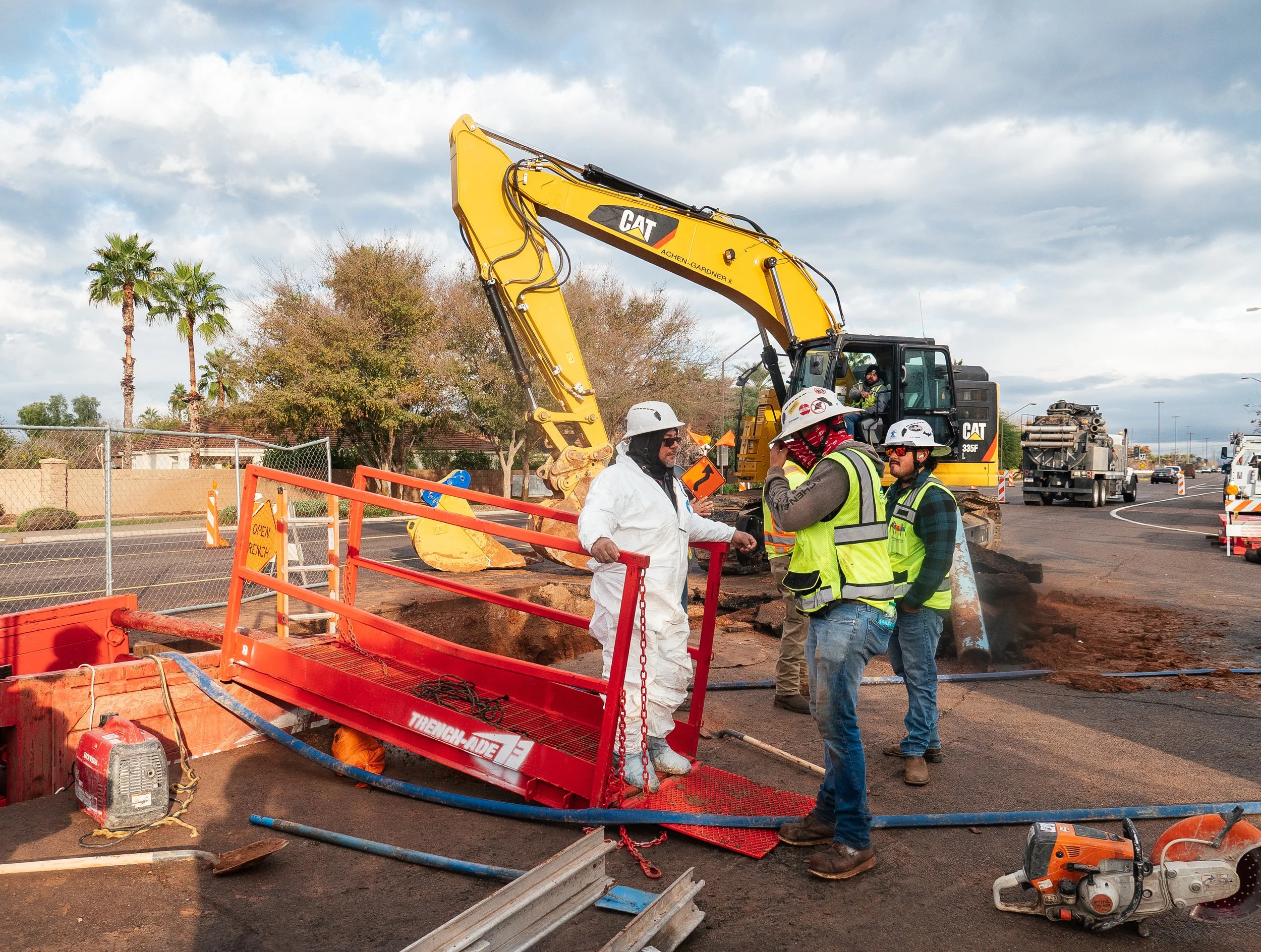
Achen-Gardner’s crews replaced segments totaling more than 500 LF of 36” and 30” pipeline and installed five new gate valves (one 36” and four 30”).
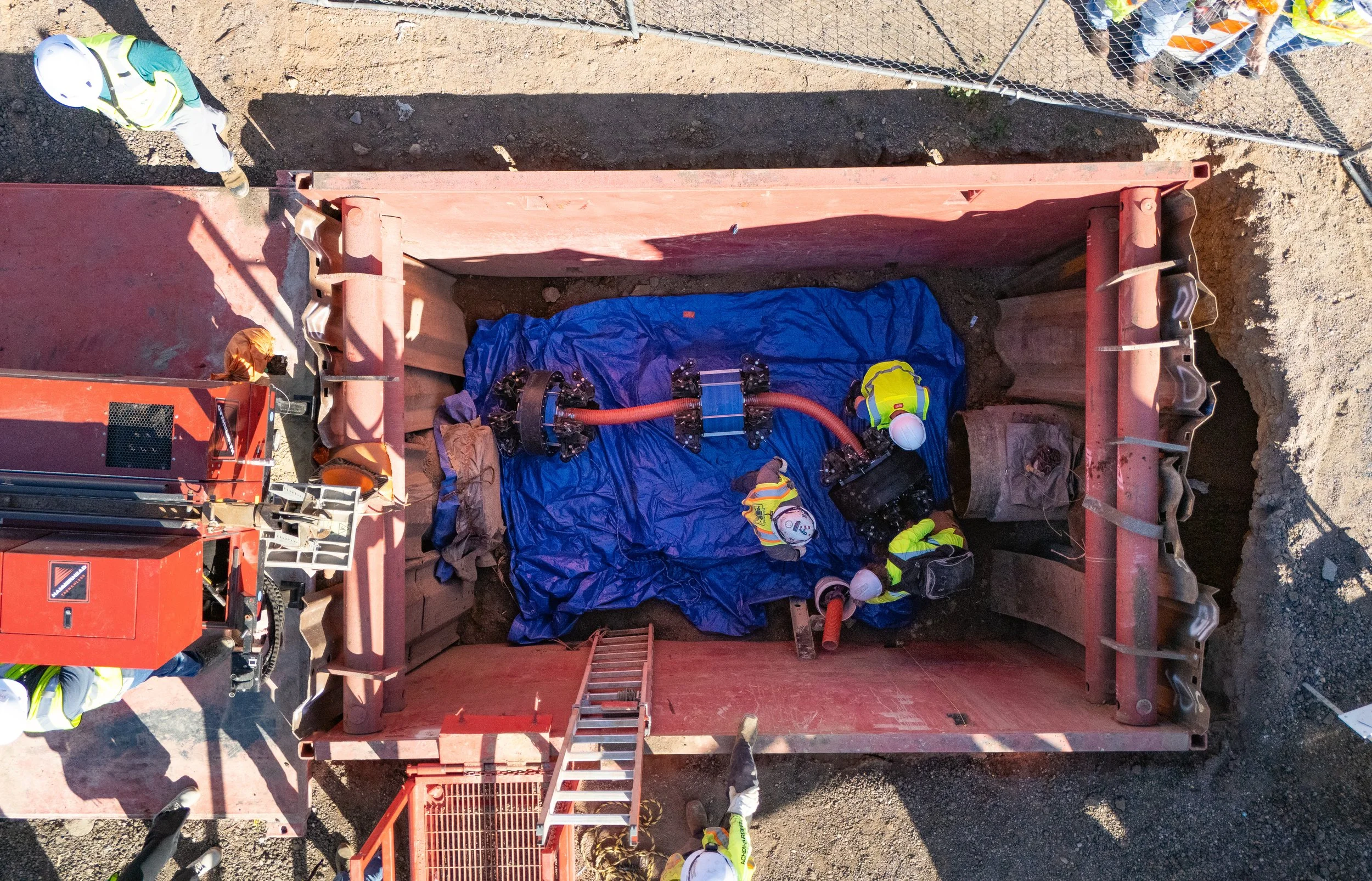
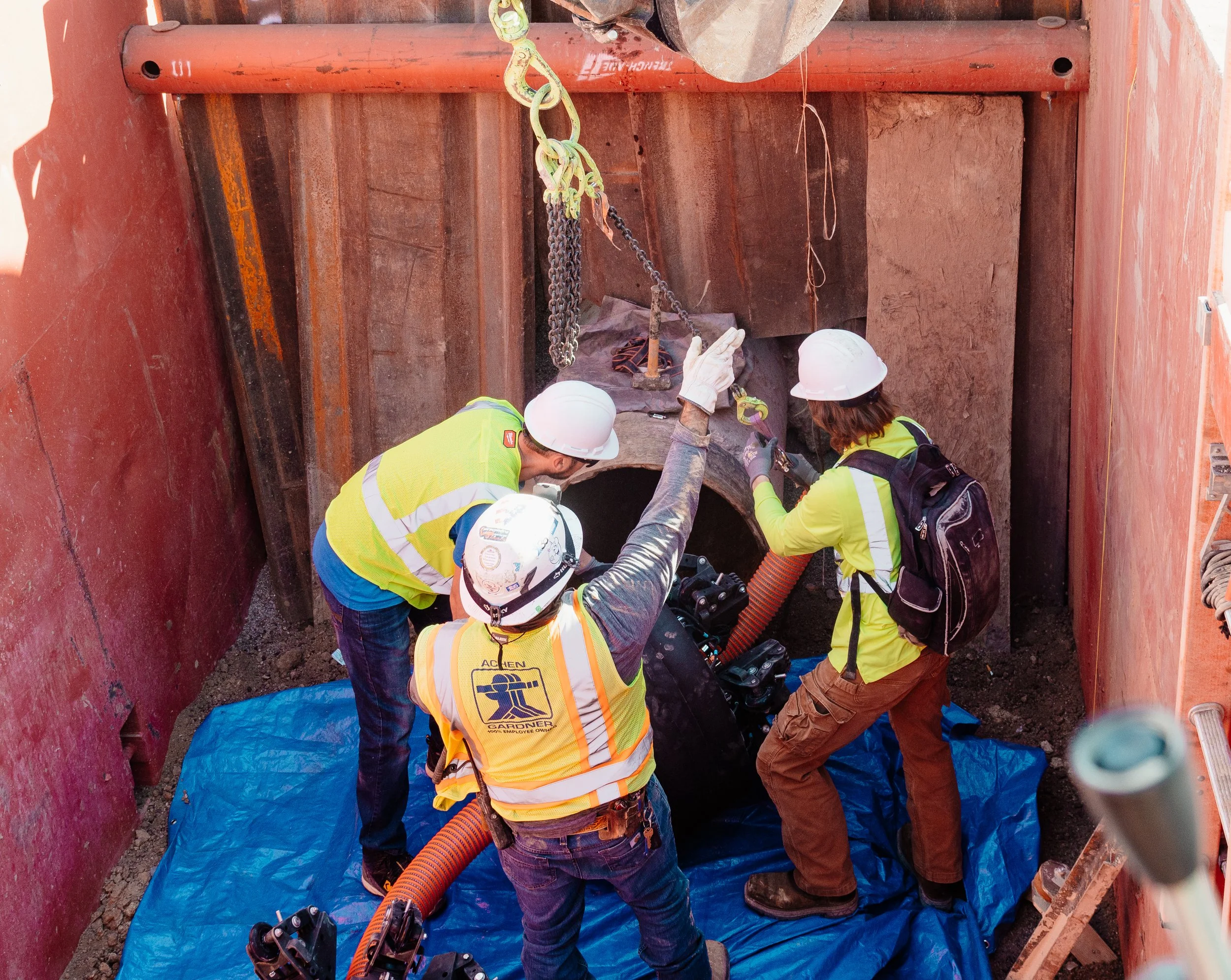
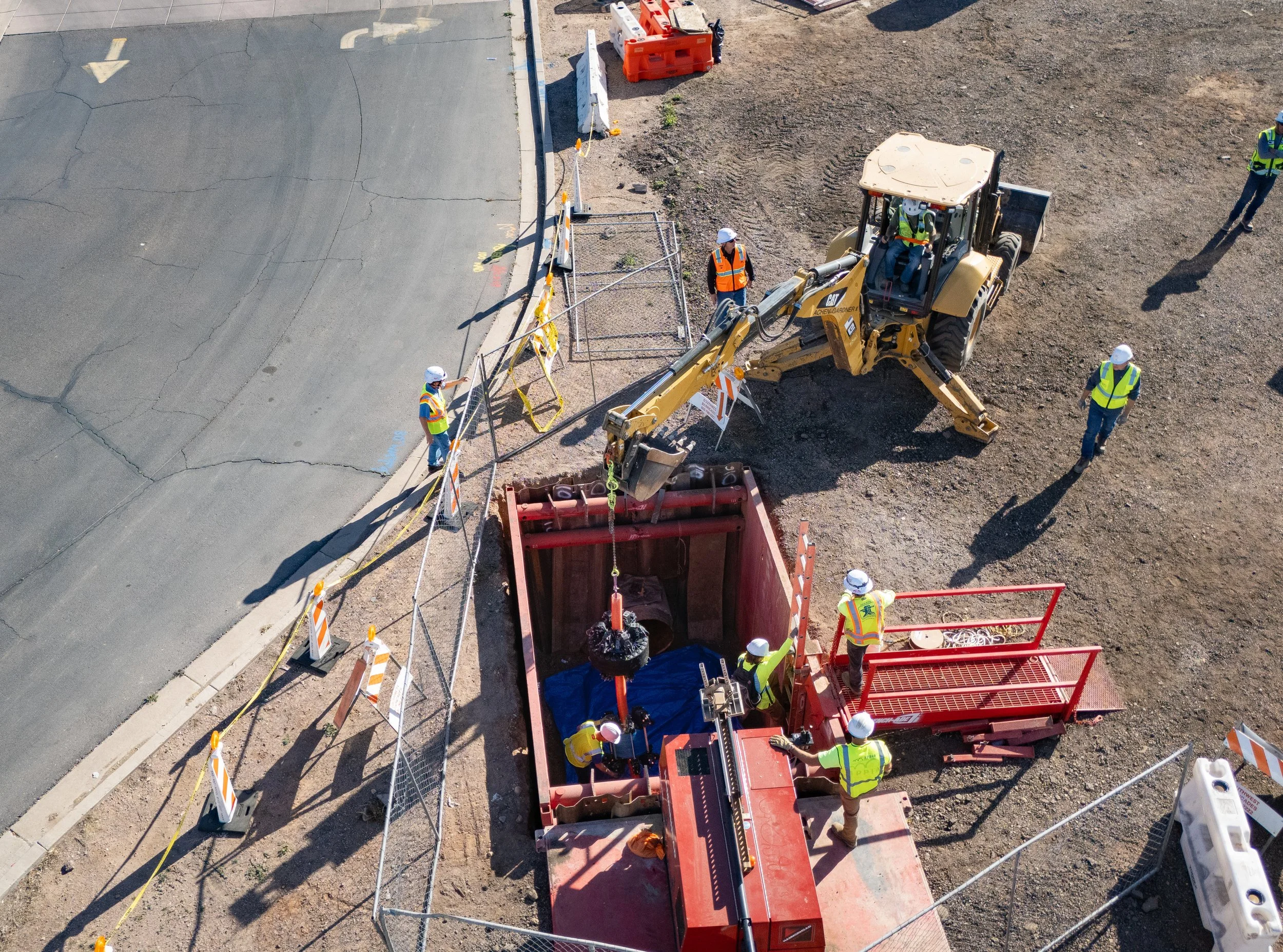
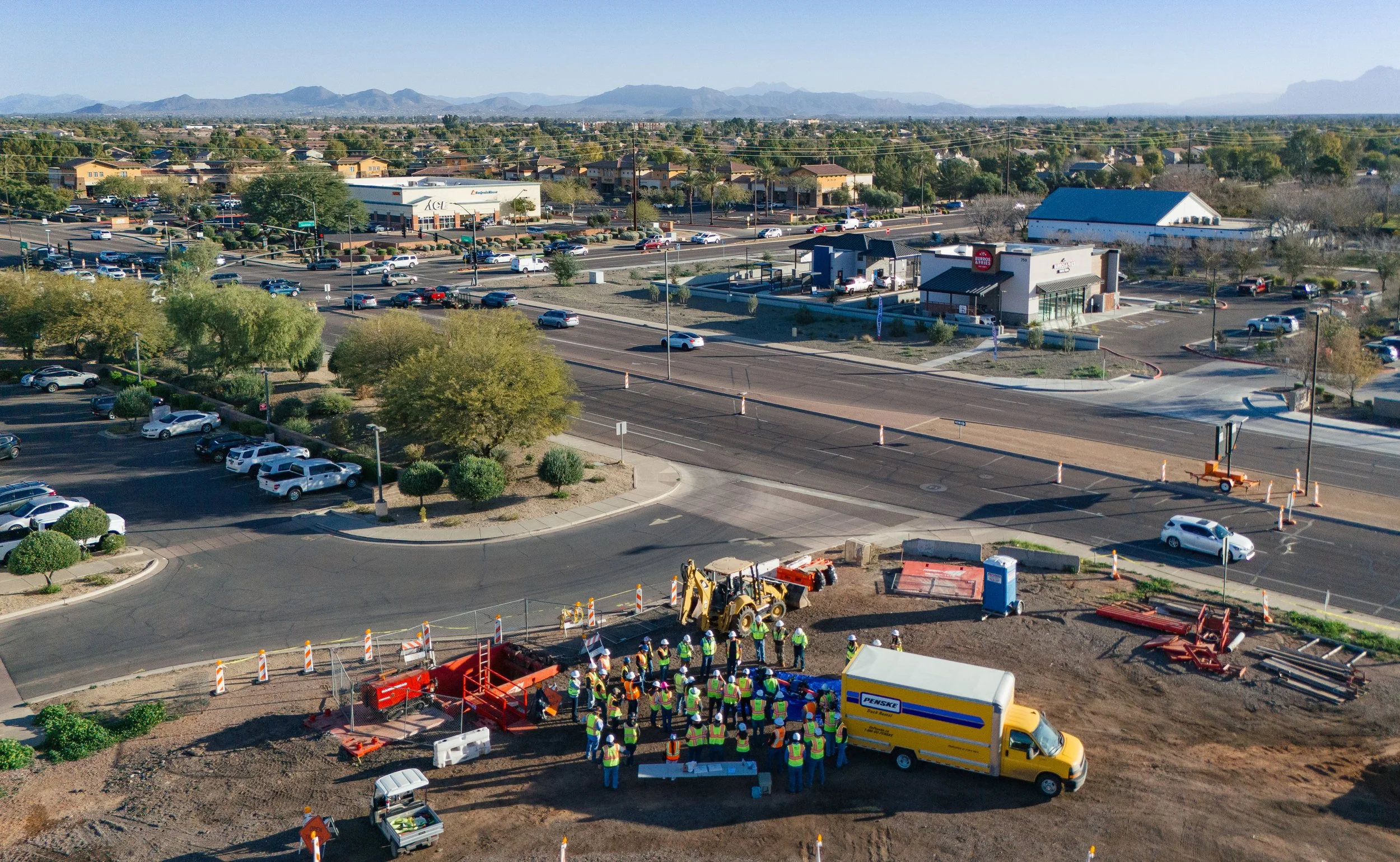
We also completed a condition assessment of a three-mile-long, 30” segment of the transmission main using advanced remote field testing (RFT) technology. We subcontracted APPIA Pipeline Solutions to design and deploy a specialized assessment tool to evaluate the pipeline, identifying corrosion and potential defects without extensive excavation. Using this tool, we pinpointed one area of concern and exposed the pipeline with a hydro-excavation truck. Once pipe corrosion was confirmed, we removed and replaced three feet of steel pipe. The RFT technology allowed this assessment to be completed and the results analyzed quickly, meaning this repair could be investigated and repaired during the transmission main outage and within the traffic control that was already in place, saving cost and time.